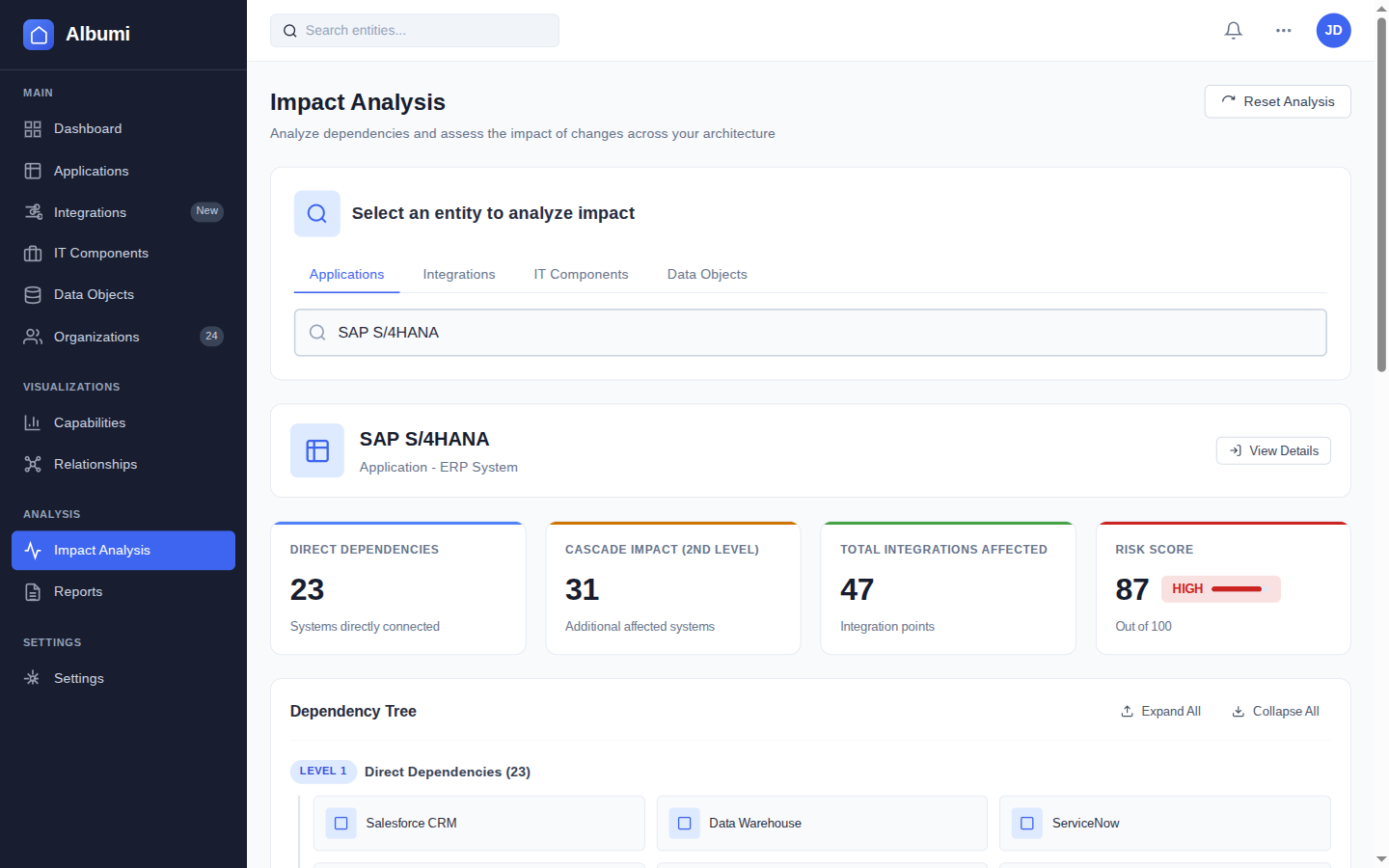
Impact analysis is a critical process that helps enterprise architects understand the ripple effects of proposed changes across their IT landscape. In this comprehensive guide, we'll explore the methodologies, tools, and best practices for conducting thorough impact assessments.
What is Impact Analysis?
Impact analysis is the systematic examination of how a proposed change to one part of your enterprise architecture will affect other interconnected systems, processes, and stakeholders. It's the difference between making informed decisions and hoping for the best.
Why It Matters
When organizations skip or rush impact analysis, they often face:
- Unexpected system outages during migrations
- Hidden dependencies that cause cascading failures
- Budget overruns from unplanned remediation work
- Stakeholder frustration from poorly communicated changes
Key Components of Impact Analysis
1. Dependency Mapping
Before you can assess impact, you need visibility into your dependencies. This includes:
- Data dependencies: Which systems consume data from the target system?
- Integration dependencies: What APIs, files, or messages flow between systems?
- Infrastructure dependencies: Shared databases, servers, or network segments
2. Stakeholder Identification
Every system has stakeholders beyond the immediate technical team:
- Business process owners
- End users
- Downstream system owners
- Compliance and security teams
3. Risk Assessment
Quantify the potential impact using factors like:
- Number of affected users
- Business criticality of dependent processes
- Data sensitivity and compliance requirements
- Recovery time objectives (RTO)
Best Practices for Impact Analysis
- Start early - Don't wait until implementation to assess impact
- Maintain current documentation - Outdated architecture diagrams lead to blind spots
- Automate where possible - Manual dependency tracking doesn't scale
- Involve stakeholders - Technical analysis alone misses business context
- Document assumptions - Make your analysis reproducible
Tools for Impact Analysis
Modern EAM tools like Albumi can automatically map dependencies and visualize impact across your enterprise. Instead of manually tracing connections through spreadsheets, you get real-time visibility into:
- Application-to-application integrations
- Data lineage across systems
- Infrastructure dependencies
- Business capability mappings
Conclusion
Effective impact analysis is the foundation of confident decision-making in enterprise architecture. By investing in proper tooling and following structured methodologies, you can reduce risk and accelerate your transformation initiatives.