Features / Organization Management
Organization Management
Every architecture question eventually leads to "who owns this?" — who's responsible for this application, who manages this integration, who do I call when something breaks. Without clear ownership, incidents take longer to resolve, decisions stall, and accountability is unclear.
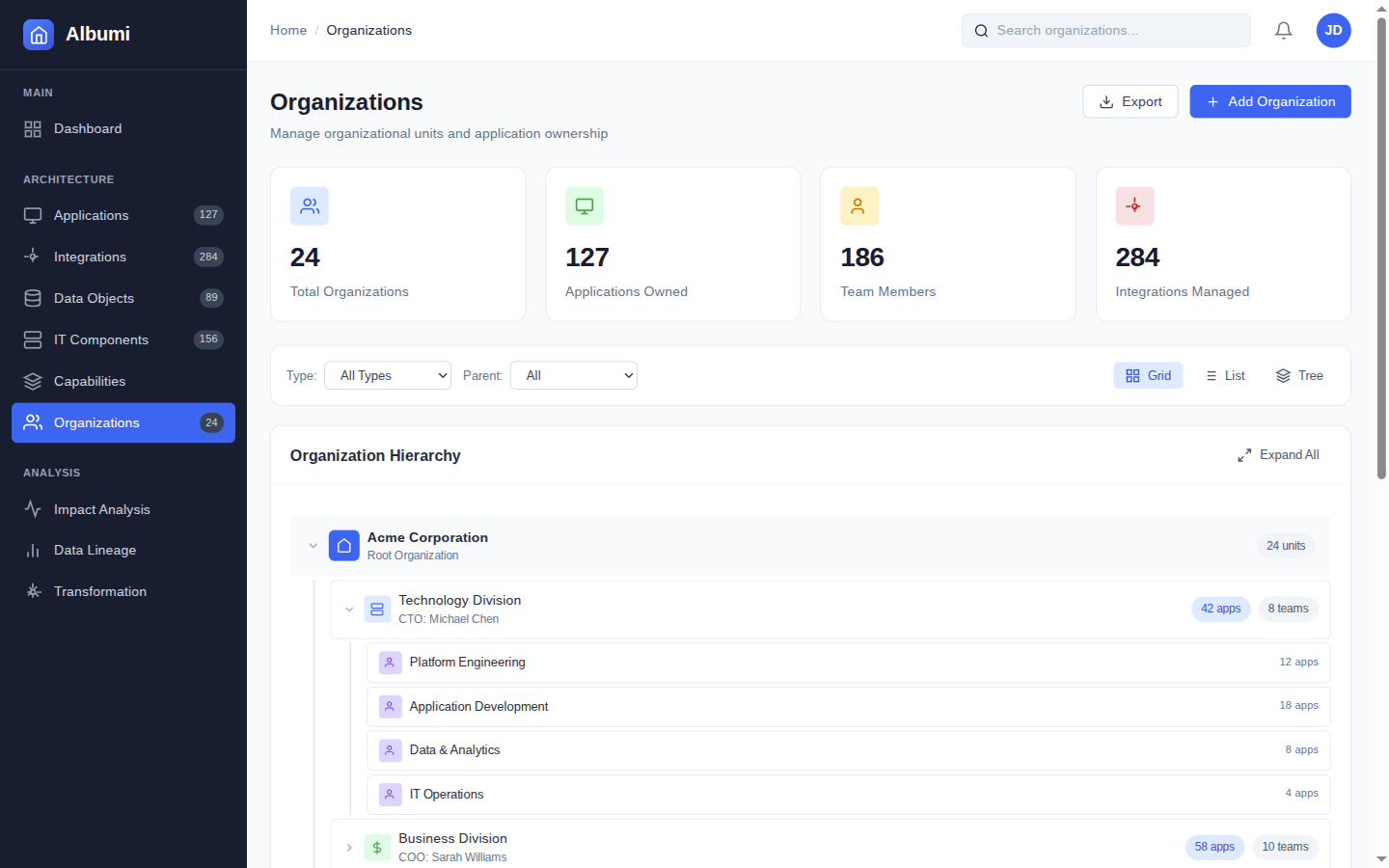
Albumi tracks your organization hierarchy and links it to everything in your architecture. Every application, integration, and IT component has an owning team. Filter any view by organization to see one team's complete landscape.
What You Can Do
Organization Hierarchy
Model your organization structure — departments, teams, sub-teams. This hierarchy is the backbone of ownership: applications and integrations are assigned to organizations, and you can drill down or roll up at any level.
Application Ownership
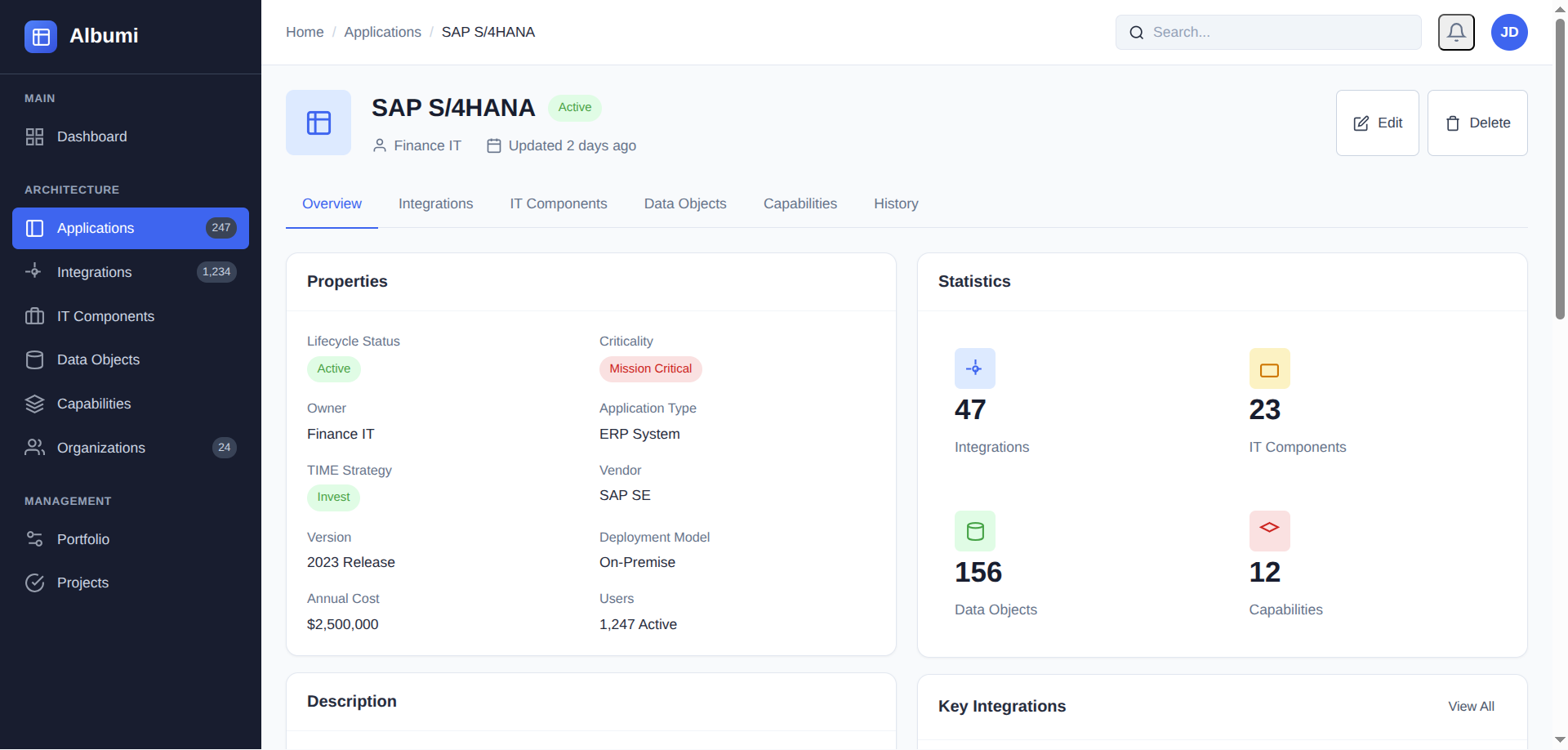
Every application has an owning organization. See all applications owned by the Finance team, the Engineering platform team, or the Marketing department. When an application has no owner, it shows up — no more orphaned systems hiding in the portfolio.
Stakeholder Discovery
When you're planning a change, Albumi shows you all affected owners through dependency analysis. Decommissioning the legacy ERP? Here are the 4 teams that own applications depending on it — your stakeholder list, automatically.
Integration Ownership
Integrations have owners too. When an integration fails at 2 AM, the on-call team needs to know who's responsible for fixing it — source team, target team, or middleware team. Albumi makes this explicit.
IT Component Ownership
Databases, platforms, and infrastructure have owners too. When a technology reaches end-of-life, the owning team is responsible for migration planning. Clear ownership prevents the "I thought someone else was handling it" problem.
Example: Incident Response
The order processing integration fails on a Friday evening. In Albumi, the on-call engineer looks up the integration: owned by the Integration Platform team, source application owned by Commerce team, target owned by Logistics team. The middleware component is managed by the Cloud Infrastructure team.
Within 2 minutes, they know exactly who to pull into the incident channel. No Slack-searching "does anyone know who owns the order sync?", no waiting until Monday to find the right person.
Works Together With
Application Portfolio
Every application in the portfolio has an owning organization — filter the portfolio by team.
Impact Analysis
Impact analysis shows affected owners — your stakeholder list for any planned change.
Reports & Dashboard
See application counts and health metrics broken down by organization.
Clear Ownership Across Your IT Landscape
Sign up for early access and bring clarity to who owns what.
Get Early Access